
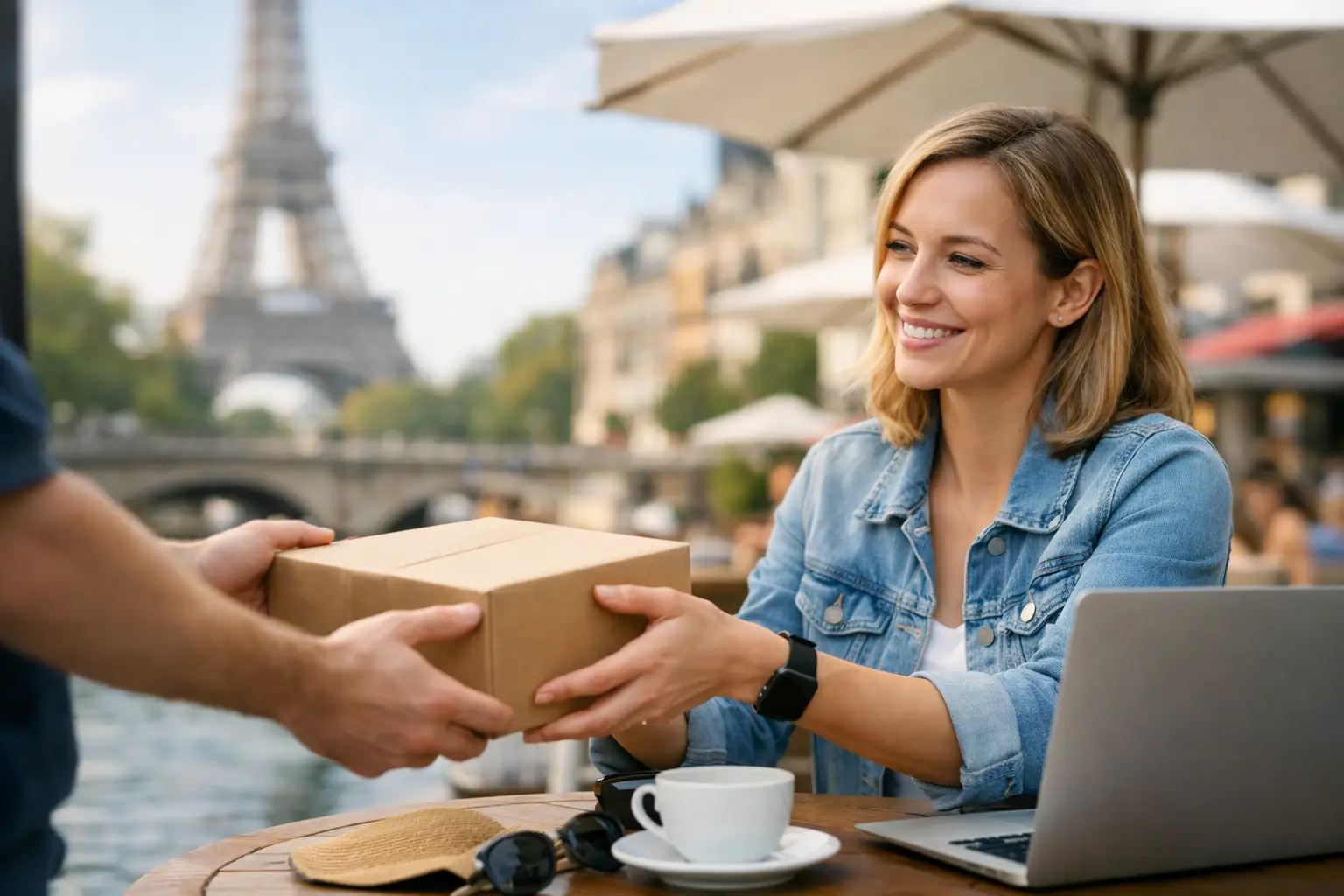
A parcel arrives while you are in another country, the courier needs a signature, and the tracking page says “delivery attempted”. For seasonal residents, expats, remote workers and business owners, this is not a small inconvenience. It can mean delayed contracts, missed replacement bank cards, lost online orders or official post left sitting in the wrong place. If you need to receive parcels when abroad, the real issue is not shipping. It is control.
The good news is that there are workable ways to stay reachable without being physically present. The right setup depends on what you receive, how often you travel and whether you need a personal solution, a business solution or both.
Why it is difficult to receive parcels when abroad
Most delivery networks are built around one assumption: someone will be available at a fixed address. That is where problems begin. If you split your time between countries, stay in short-term accommodation or manage property remotely, your address may be technically valid but operationally unreliable.
Standard residential delivery can work for low-value items, but it often breaks down with signed-for parcels, official documents and repeat deliveries. Holiday complexes, shared buildings and unmanaged post areas add another layer of risk. Parcels may be left with neighbours you do not know, returned to sender, or held for collection in a depot you cannot reach.
For business users, the stakes are usually higher. Samples, legal notices, replacement devices and customer returns all require a more dependable process. A missed parcel can create admin delays, affect service levels or make a business look less established than it is.
The main ways to receive parcels when abroad
There is no single answer for everyone. Some arrangements are fine for occasional online shopping. Others are better suited to ongoing post management and business continuity.
Sending parcels to friends, neighbours or family
This is the first option many people try because it is simple and familiar. If you trust the person and deliveries are infrequent, it can work reasonably well. It is also low cost.
The trade-off is consistency. People go away, forget to mention attempted deliveries, misplace packaging or feel uncomfortable handling important post. It is rarely the best choice for sensitive documents, repeated deliveries or anything time-critical. What works once may become unreliable when you need it most.
Using parcel shop or locker collection
Collection points and lockers can be useful if you know exactly where you will be and when you can collect. For short trips, they offer flexibility and reduce the chance of a failed home delivery.
But this option is less helpful if you are already abroad, moving between locations or relying on someone else to collect. Storage windows can be short, and not every sender or courier supports the same collection network. It solves a narrow problem rather than the broader issue of staying reachable.
Redirecting post from your home address
Postal redirection can help if you are away temporarily and still want items forwarded elsewhere. It may suit straightforward domestic post for a limited period.
However, redirection is not always ideal for parcels, and it does not create a stable long-term address. If your travel pattern changes, or if you need someone to physically receive items, sign for them, store them and notify you, redirection only goes part of the way.
Using a virtual mailbox and parcel reception service
For people who travel regularly or live abroad for part of the year, this is usually the most dependable setup. A virtual mailbox service gives you a fixed address where post and parcels can be received securely, managed on your behalf and, depending on the service, scanned, stored or forwarded.
That matters because it turns delivery from a one-off event into a controlled process. Instead of hoping someone is in, you have a designated address and a clear handling system behind it. If an item arrives while you are away, it is received, logged and dealt with according to your instructions.
For many users, especially those with ties to Spain, this arrangement is less about convenience and more about continuity. You remain reachable whether you are in Gran Canaria, mainland Europe or back in the UK.
What to look for in a parcel reception service
Not all services offer the same level of support. If your goal is simply to have a delivery accepted, a basic receiving point may be enough. If you need proper oversight, look more closely at how items are handled after arrival.
Security should come first. You want a service that receives parcels at a staffed location, records incoming items properly and keeps them in secure storage until you decide what happens next. This is especially important for official documents, business materials and higher-value deliveries.
Visibility matters as well. Being told that something has arrived is useful. Being able to see what arrived and choose whether to scan, hold or forward it is better. That is where virtual mailbox services become much more practical than ad hoc arrangements.
If you receive business correspondence, consider presentation too. A residential workaround may be enough for personal shopping, but companies often need a professional address and a reliable process behind it. That can support both daily operations and brand credibility.
Personal use versus business use
The best setup changes depending on what you are receiving.
For personal users, the priority is usually peace of mind. You may want to know that bank cards, government letters, property documents or online orders will not be missed while you are travelling. In that case, secure reception and remote access to incoming post are often more important than same-day forwarding.
For businesses, process is everything. Parcels may contain stock samples, signed contracts, replacement equipment or customer returns. A missed delivery can interrupt work, delay a response or make your operation look patchy. A business address with parcel handling is often the stronger choice because it combines reliability with a more established presence.
This is one reason services such as Letterbox.es appeal to both individuals and companies. The value is not just having an address. It is having a dependable operational base that keeps post, parcels and communications moving while you are elsewhere.
Practical steps to set up a reliable solution
Start with volume and type. If you receive only occasional low-risk parcels, a simple arrangement may be enough. If you regularly receive official post, signed deliveries or business items, use a service built for handling them properly.
Next, think about timing. Do you need items forwarded immediately, held until your return, or opened and scanned so you can act remotely? Many people focus on the receiving part and forget that onward handling is where the real convenience sits.
Then check the address itself. Some services are suitable for personal post only, while others also support business registration and professional correspondence. If you are a non-resident property owner, entrepreneur or remote company director, that distinction matters.
Finally, make sure the system fits your travel pattern. A good arrangement should keep working whether you are away for two weeks or six months. If it depends on one person being available, it is not really a system.
Common mistakes to avoid
One common mistake is assuming that tracked delivery means secure delivery. Tracking only tells you where the parcel is supposed to be in the process. It does not guarantee that the right person can accept it, store it safely or act on it.
Another is using a temporary solution for a permanent problem. If you spend significant time abroad each year, relying on neighbours and one-off favours usually becomes messy. It may feel cheaper at first, but the hidden cost appears in delays, confusion and missed items.
It is also easy to underestimate the difference between post and parcels. Letters can often wait. Parcels often need space, signatures and active handling. If your setup covers one but not the other, gaps appear quickly.
A better way to stay reachable
If your life or business crosses borders, the aim is not merely to receive deliveries. It is to stay organised, professional and in control wherever you happen to be. The most effective solution is usually one that gives you a stable physical address, secure parcel reception and the option to manage everything remotely.
That way, travelling does not interrupt your post, your property administration or your business operations. You are not chasing couriers, apologising for delays or wondering where a signed-for item ended up. You know where it was delivered, who received it and what happens next.
For anyone trying to receive parcels when abroad, that certainty is what makes the difference. A dependable address is not just a convenience. It is part of running your personal affairs and your work properly, even when you are nowhere near the front door.
The most useful setup is the one that keeps working quietly in the background, so you can focus on where you are instead of worrying about what has just been delivered.