
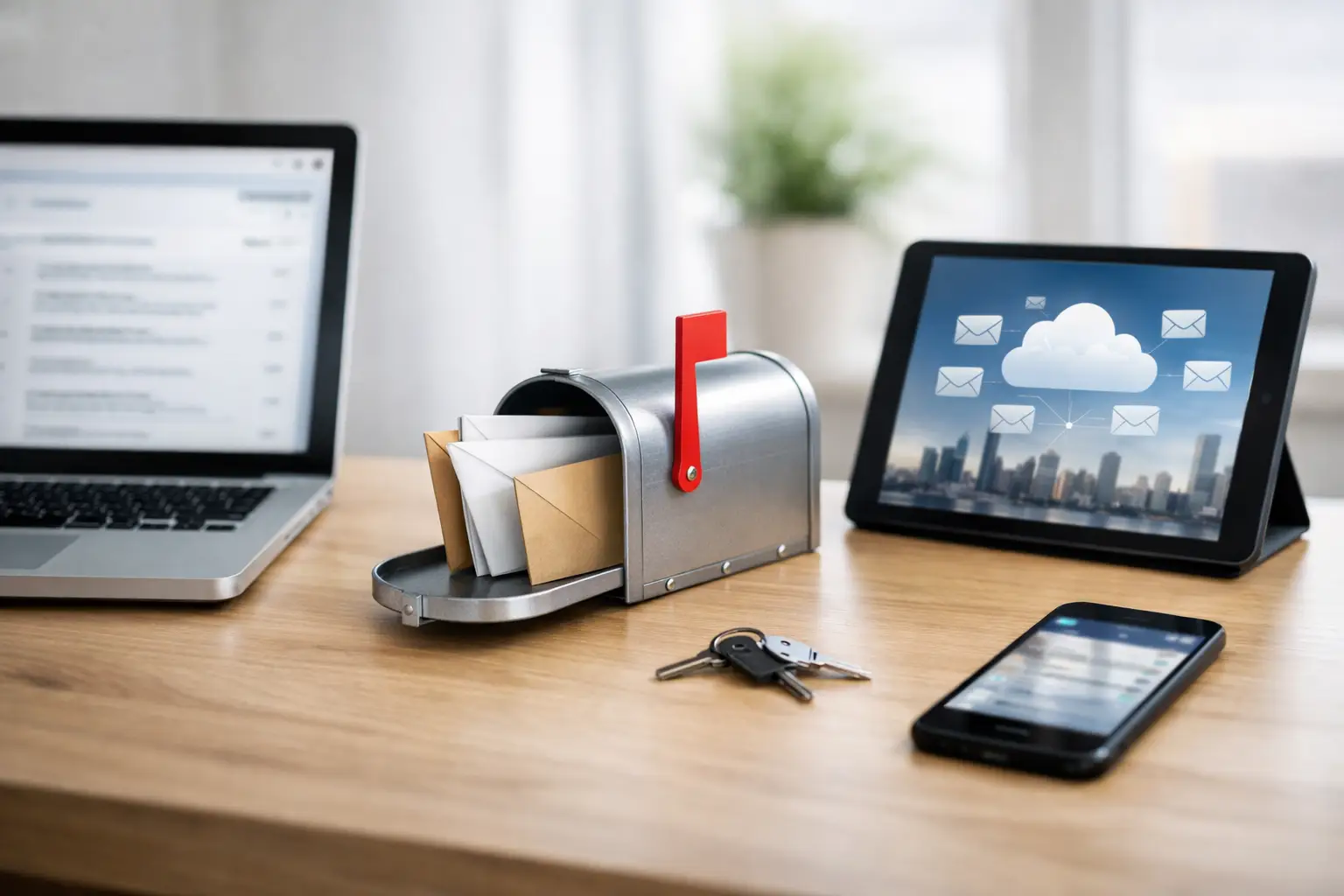
Missed post is rarely just an inconvenience. It can mean a delayed legal notice, a parcel left in the wrong building, or business correspondence sitting untouched while you are abroad. This guide to virtual mailbox services is for people who need a more dependable way to receive, view and manage post without being tied to one location.
For seasonal residents, expats, non-resident property owners and remote businesses, the old model of relying on a home address or asking a neighbour to keep an eye on deliveries often breaks down quickly. A virtual mailbox service gives you a fixed physical address and remote control over what arrives there. That sounds simple, but the differences between providers can be significant.
What a virtual mailbox service actually does
At its core, a virtual mailbox service receives your post at a real address on your behalf. From there, the provider can scan the outside of letters, open and scan contents if you authorise it, forward items to another address, store them securely for collection, or handle parcels that need signing for.
Some services stop at basic post management. Others add practical business support such as a registered business address, parcel reception, document handling and occasional office access. That matters if you are not just trying to keep up with personal correspondence, but also need a professional presence for a company or freelance operation.
The best way to think about it is this: you are not buying a digital inbox. You are paying for a reliable physical address, combined with controlled access to your incoming post.
Who this guide to virtual mailbox services is for
Virtual mailbox services are not only for frequent travellers. They are especially useful for people whose post needs stay constant even when their location does not.
If you spend part of the year in Gran Canaria and the rest elsewhere, a fixed mailing address can prevent official letters from going missing in a holiday complex or shared building. If you own property in Spain but live abroad, it gives you continuity when utility bills, tax notices or community correspondence arrives. If you run a small business remotely, it can help you maintain a professional address without taking on a full office lease.
There is also a less obvious use case: people who simply want more control. A secure third-party address can reduce the risk of missed deliveries, provide better parcel handling, and stop important documents being left where anyone can see them.
The key services to compare
Not all providers offer the same level of support, so it helps to compare what is included before looking at price alone.
Mail receipt and notification
This is the foundation. A provider should receive standard post, signed-for items and, ideally, courier deliveries. You should also be notified promptly when something arrives. Fast notification matters most for time-sensitive documents, especially if you live abroad.
Scanning and digital access
Many customers choose a virtual mailbox because they want to read documents remotely. Some providers scan only the envelope. Others offer full content scanning on request or as part of a plan. Check how quickly scans are uploaded, how clear they are, and whether there are limits on the number of items included each month.
Forwarding options
Forwarding is where convenience can become expensive if you do not read the terms carefully. Ask where the provider can forward to, how often dispatches happen, whether you can combine multiple items into one shipment, and what courier or postal methods are available.
If you travel between countries, flexible forwarding is often more valuable than a low monthly fee.
Parcel handling and storage
Letters are one thing. Parcels are where many people run into trouble with ordinary residential addresses. A useful provider should be able to accept deliveries that require a signature, store parcels securely, and make collection or onward dispatch straightforward.
This matters particularly for non-residents, online sellers, and anyone furnishing or maintaining property from abroad.
Business address services
If you are using the address for a company, check whether the provider supports registered business use and whether this is clearly separated from personal post services. Some businesses also need meeting space or light office support from time to time. That may not be essential, but it can be a practical advantage if it is available under the same service.
What to look for before you sign up
A good virtual mailbox service should remove admin, not create more of it. Before committing, focus on the details that affect daily use.
Security should be non-negotiable. You are trusting a provider with personal documents, legal notices, account statements and business correspondence. Ask how post is stored, who can access it, how identity is verified, and how scanned documents are handled. If the provider is vague on security, move on.
Address quality is also important. Some people only need somewhere safe to receive post. Others need an address that looks professional for business use. A well-managed address in a credible location can support your image, while a poor one can do the opposite.
Then there is responsiveness. If an urgent item arrives, you need confidence that the provider will act quickly and answer questions clearly. This is one of the biggest differences between a service that looks good on a pricing page and one that actually works in practice.
The trade-offs most people miss
The cheapest plan is not always the most economical. Low entry pricing can be attractive, but extra charges for scanning, forwarding, storage, parcel handling or registered business use may add up quickly.
There is also a balance between automation and personal support. Large platforms may offer polished dashboards and broad coverage, but a more focused provider can sometimes offer better handling for local deliveries, more flexibility with forwarding requests and clearer communication when something unusual happens.
It also depends on your post volume. If you receive only occasional letters, a simple plan may be enough. If you are handling business post, property paperwork and regular parcels, you will want a service built for that level of demand. Choosing too small a plan often leads to avoidable upgrade costs later.
How to choose the right provider
A practical way to decide is to begin with your most important problem.
If your issue is unreliable residential deliveries, prioritise secure receipt, parcel storage and prompt notifications. If your problem is managing official correspondence from abroad, focus on scanning speed, forwarding flexibility and document security. If you need a base for a company, start with business address eligibility, professional presentation and any office support options.
After that, review the service terms with three questions in mind. What happens when post arrives? What happens when you are in another country? What happens when something urgent or unusual needs attention? A provider that answers those clearly is usually a safer choice than one that relies on broad promises.
For customers in Spain and especially Gran Canaria, local reliability can make a real difference. Postal arrangements that seem workable on paper can become frustrating in shared developments, seasonal properties or buildings with inconsistent reception. In that context, a specialist service such as Letterbox.es can offer a more dependable setup because it combines post receipt, parcel handling, digital access and business support in one place.
Common concerns about virtual mailbox services
Some customers worry that using a third-party address will feel impersonal. In practice, the opposite is often true when the service is well run. You gain clearer visibility over incoming post and a more structured process for dealing with it.
Others worry about legality or acceptance. The answer depends on what you want the address for. A correspondence address, parcel address and registered business address can each have different requirements. That is why it is important to confirm permitted uses before signing up rather than assuming one address covers everything.
There is also the question of control. People sometimes assume scanning means giving up privacy. In fact, a properly managed service should give you more choice, not less. You decide what gets opened, scanned, forwarded or held.
When a virtual mailbox makes the most sense
A virtual mailbox is at its best when it solves a real continuity problem. If you are frequently away, managing property remotely, setting up a business presence, or tired of uncertain deliveries, it gives you one stable point of contact for your post.
It is less about replacing a letterbox and more about reducing friction. You know where your documents are going. You know when they arrive. You can decide what happens next without needing to be physically present.
That is the real value. A dependable address and a clear process can save far more than time. They can prevent missed deadlines, lost parcels and the kind of low-level administrative stress that follows you from one place to another. Choose a service that fits the way you live or work now, but also one that will still serve you well when your plans shift.