
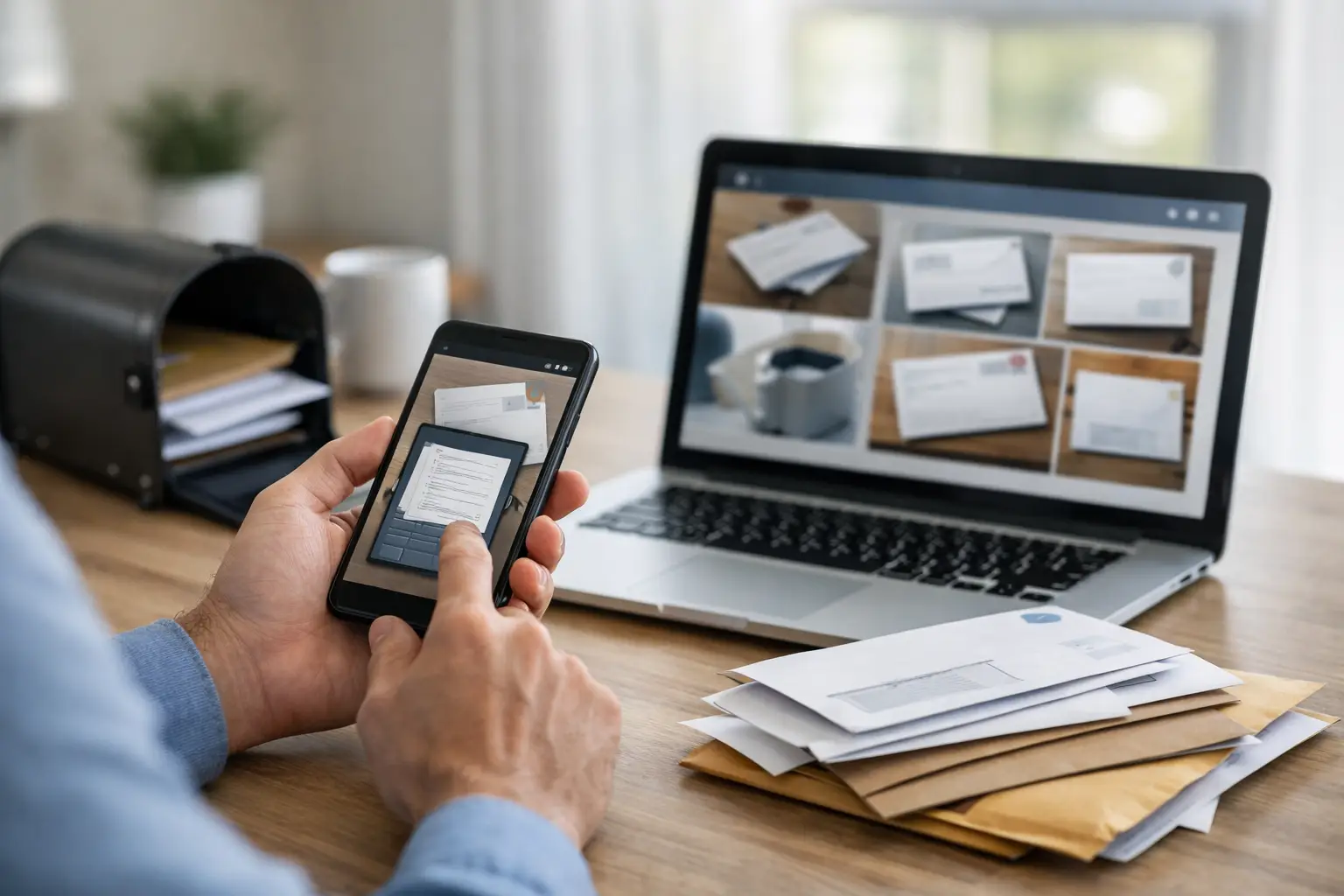
You only need to miss one tax letter, legal notice or bank card delivery to realise how fragile your postal setup really is. For seasonal residents, expats, remote workers and business owners, a remote mail management service is not a nice extra. It is often the difference between staying in control and finding out too late that something important has been sitting in the wrong letterbox.
At its simplest, the service gives you a dependable physical address and a way to manage incoming post without being there in person. But the real value is broader than that. It brings structure to something that is often handled informally – a neighbour collecting letters, a property manager checking occasionally, or parcels left in places they should never have been left.
What a remote mail management service actually does
A remote mail management service receives your post and parcels at a dedicated address, logs what arrives, and gives you options for what happens next. That may include scanning the envelope or contents, storing items securely, forwarding them to another address, or holding parcels until you are ready to collect them.
For many people, the first appeal is convenience. For most, the lasting benefit is reliability. Official correspondence does not stop because you are abroad, between properties, travelling for work or operating a business without a fixed office. A stable address solves that problem, and digital access means you can act quickly when something needs attention.
This matters even more in places where property occupancy is irregular, concierge support is limited, or shared building post arrangements are less dependable than they appear. If your post is being delivered to a holiday complex, a rental flat, or a property that sits empty for part of the year, you already know the risks.
Who benefits most from remote mail management
The service is useful for more people than the phrase suggests. It is not only for businesses, and it is not only for people living permanently overseas.
Seasonal residents often need a fixed address in Spain while spending months elsewhere. They still receive utility documents, community notices, insurance paperwork and replacement cards. Without someone checking the post regularly, small delays turn into larger problems.
Expats and non-resident property owners face a similar issue. You may own or rent a place in Gran Canaria, but if you are not there year-round, important correspondence can arrive when nobody is available to receive it. Relying on ad hoc help works until it does not.
Remote professionals and entrepreneurs need something slightly different. They need continuity and a professional image. A secure address for business post, parcel handling, and selective forwarding helps keep operations organised without the cost of maintaining a full-time office.
Small companies also benefit when they want a registered business address and practical post handling in one place. That combination is often more useful than a basic address-only service because the real work starts after the post arrives.
The difference between a basic mailbox and a proper remote mail management service
Not every mailbox service offers real control. Some simply receive letters and leave the rest to you. That can be enough if you only need a collection point, but it is rarely enough if you are managing official post from abroad.
A proper remote mail management service should give you visibility, secure handling and clear next steps. You should know what has arrived, whether it has been stored safely, and how quickly you can request scanning or forwarding. If parcels are involved, storage conditions and collection arrangements matter too.
The difference is operational, not cosmetic. A low-cost mailbox that accepts deliveries but offers limited support can still leave you chasing missing items, delayed scans or unclear records. For private users that creates stress. For businesses it can affect compliance, customer communication and credibility.
What to look for in a remote mail management service
Security comes first. You are trusting a third party with personal and business correspondence, so handling standards matter. Ask how items are received, logged, stored and accessed. A professional provider should treat post as sensitive, not incidental.
Speed matters too, but only in context. Fast scanning is useful if you regularly receive time-sensitive documents. Forwarding speed is important if you need physical originals. The right balance depends on what you receive most often. Someone waiting for legal documents has different priorities from someone mainly receiving routine statements.
Location is another practical factor. If your life or business is tied to Gran Canaria, using a local provider makes sense. The same applies if you need an address in Madrid, Rome, Porto or London. The best setup is usually the one closest to where your post actually needs to exist, not just the cheapest option available online.
Then there is service scope. Some people only need letter handling. Others need parcel reception, business address registration, occasional document forwarding and even access to workspace when they are in town. Combining those services under one provider can remove a lot of friction.
Why this matters for business users
Business post has a way of becoming urgent without warning. A supplier document, compliance notice, banking letter or customer return can all require prompt action. If your company operates remotely, or if directors spend time between countries, a weak postal setup creates unnecessary exposure.
A remote mail management service gives a business a fixed administrative base. That helps with consistency, but it also supports professionalism. A registered address with proper post handling looks more credible than using a changing residential address or relying on whichever team member happens to be available.
There are limits, of course. Not every provider offers the same level of support for company registration, legal correspondence or document handling. It is worth checking what is included and what remains your responsibility. The point is not to replace proper business administration. It is to make that administration easier to maintain from anywhere.
Why parcel handling is part of the picture
Many people start by thinking about letters and quickly realise parcels are the bigger headache. Missed deliveries, building access problems and items left unattended are common issues, especially in shared developments or properties that are not occupied full time.
A service that can receive and store parcels securely solves a practical problem that affects both households and businesses. It is especially useful if you are ordering equipment, replacement parts, documents, or personal deliveries while travelling or between locations.
Here again, the detail matters. Parcel size limits, storage periods and notification times can vary. The service should fit your actual habits. If you receive occasional online orders, one arrangement may be enough. If you are running a small business and receiving regular deliveries, you need something more structured.
A remote mail management service in Gran Canaria
Gran Canaria is a strong example of where this service becomes genuinely useful rather than merely convenient. Many property owners, winter residents and remote professionals are not present all year, yet they still need a reliable address and secure post handling on the island.
That is where a provider such as Letterbox.es fits naturally. The value is not only in receiving post. It is in giving customers a dependable local base, digital oversight of incoming correspondence, parcel security and the option to add forwarding or business address support when needed.
For someone managing life across more than one country, that kind of continuity matters. You are less dependent on chance, and far less likely to discover a problem weeks after it could have been dealt with.
Is it worth paying for?
Usually, yes – if the alternative is uncertainty. The monthly cost of a remote service is often modest compared with the cost of missed deadlines, lost documents, failed deliveries or the time spent asking others to check your post.
That said, the right plan depends on usage. If you receive very little post and are always nearby, a simple holding service may be enough. If you need regular scans, forwarding, parcel reception or a business address, a more complete plan makes sense. Paying for features you will never use is unnecessary, but underestimating what you need can be just as costly.
The most useful way to judge value is to ask one practical question: if something important arrived tomorrow, would you know about it quickly and be able to act on it? If the answer is no, your current setup is probably weaker than it should be.
A dependable postal address used to be a background detail. For people living, working and travelling more flexibly, it has become part of staying reachable, credible and properly organised. The best remote setup is the one that lets you get on with life, knowing your post is exactly where it should be.