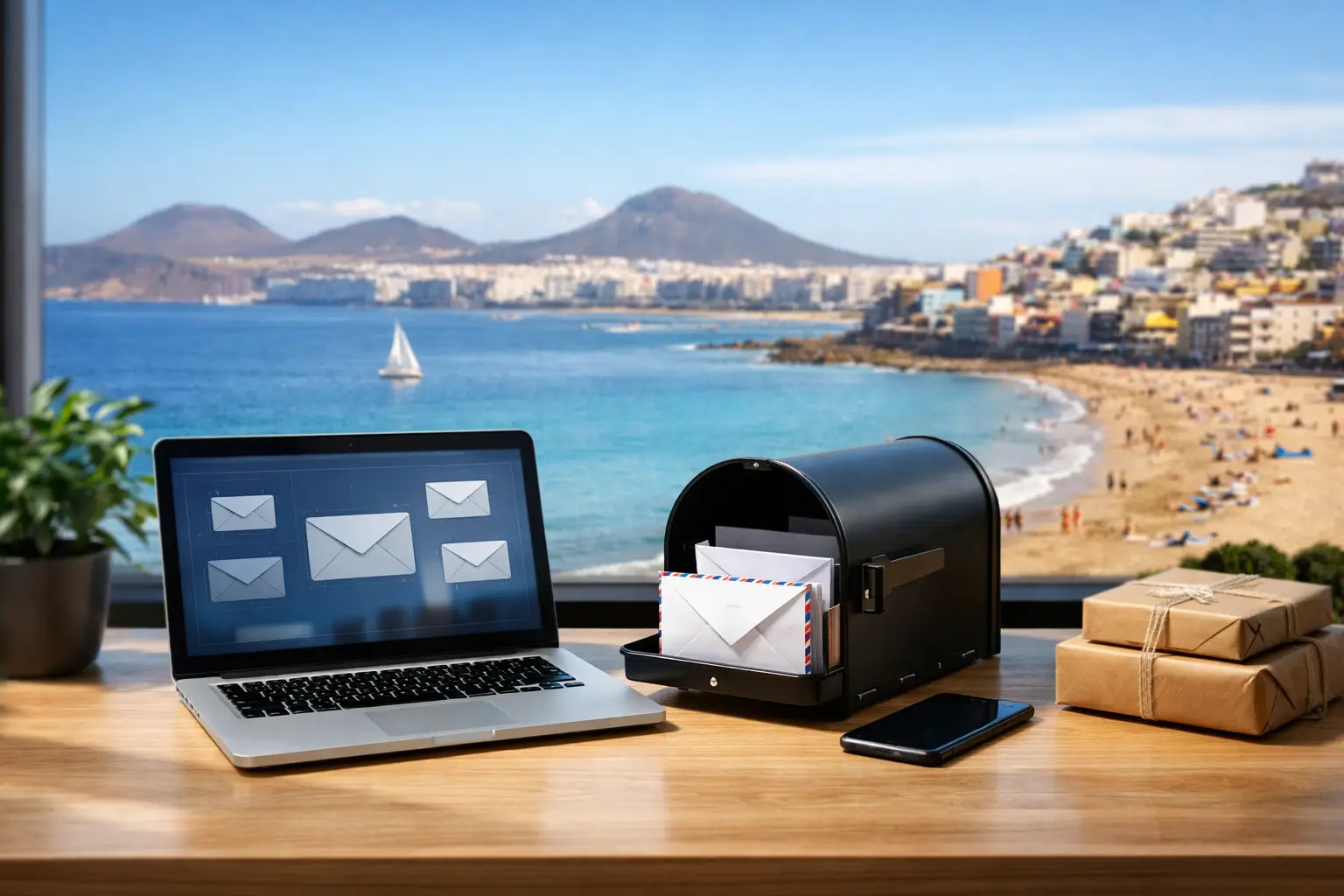
A missed tax letter, a parcel left with the wrong neighbour, or official post sitting untouched in an empty holiday property can become a real problem in Gran Canaria. That is exactly why a virtual mailbox Gran Canaria service appeals to seasonal residents, expats, remote workers and business owners who need a dependable address without being on the island every day.
A virtual mailbox is not just a place where post arrives. At its best, it gives you a stable physical address, secure handling of letters and parcels, digital visibility over incoming mail, and the option to forward items when and where you need them. For people managing life or work across more than one location, that combination removes a lot of uncertainty.
What a virtual mailbox in Gran Canaria actually does
The idea is simple. Your mail is delivered to a real address in Gran Canaria, then handled according to your instructions. Instead of hoping someone is around to receive an important envelope, you have a system in place.
For some customers, that means having envelopes received and logged so nothing goes missing. For others, it means scanning incoming post so they can read documents remotely. In many cases, it also includes forwarding physical mail or storing parcels safely until collection or dispatch. The value is not in the address alone. It is in the control that comes with it.
This matters more in Gran Canaria than many people expect. A large part of the island’s property market includes holiday flats, seasonal homes and short-term lets. Mail handling in those settings is often inconsistent. Shared entrances, changing occupants and long periods of absence create obvious gaps. A professional mail service closes them.
Why people choose a virtual mailbox service in Gran Canaria
The most common reason is continuity. If you are only on the island for part of the year, or you split your time between Spain and another country, post still needs to be received somewhere secure. Official correspondence rarely waits for a convenient moment.
There is also the question of speed. With a digital mail scanning option, you do not need to wait until your next trip to see what has arrived. That can make a big difference for legal notices, banking correspondence, contract paperwork or time-sensitive administration.
For business users, the appeal is slightly different. A proper business address supports a more professional image than using a home address, especially if you work remotely or run a small company without a full-time office. It also creates a clearer separation between personal and business post, which helps keep administration organised.
Parcel handling matters too. Deliveries can be awkward if you are travelling, living in a complex with unreliable reception arrangements, or working irregular hours. A service that accepts parcels and stores them securely gives you more flexibility and fewer failed deliveries.
Who benefits most
Seasonal residents are one of the clearest examples. If you spend winters in Gran Canaria and summers elsewhere, you still need a reliable way to receive post all year round. A virtual mailbox keeps everything moving while you are away.
Expats and non-resident property owners often face the same issue. Utility letters, community notices, insurance documents and government correspondence do not stop simply because you live abroad. Having one secure point of receipt is far easier than relying on neighbours, estate agents or intermittent property managers.
Remote professionals benefit because they need mobility without losing operational control. If your work takes you between countries, you need to stay reachable and organised. Physical post is still part of that reality, even if most of your business is digital.
Small companies, freelancers and start-ups also gain from a professional address and structured mail handling. It keeps paperwork manageable and supports a more credible business presence in Gran Canaria without the cost of a permanent office.
The difference between a virtual mailbox and a PO box
People often compare these two, but they are not the same thing. A PO box is usually more limited. It is designed mainly for collection, and in many cases does not give the flexibility modern users need for scanning, forwarding, parcel reception or business support.
A virtual mailbox is broader and more practical. It combines a real mailing address with managed services around that address. You are not simply renting a box. You are creating a process.
That distinction becomes important if you need to receive courier parcels, view mail remotely, or use the address as part of your business setup. If your needs are basic and local, a simpler option may do. If your life or work is cross-border, a virtual service is often the better fit.
What to look for in a provider
Security should come first. Mail handling only works if you trust the provider receiving your letters, documents and parcels. Look for clear procedures on receipt, storage, scanning and forwarding. You should know who handles your post and what happens at each stage.
The second factor is flexibility. Not everyone needs the same level of service. Some people just want secure receipt and occasional forwarding. Others need regular scanning, parcel storage, a registered business address or even access to serviced office space from time to time. A good provider lets you choose a plan that fits the way you actually live or work.
Location matters as well. If you need an address in Gran Canaria specifically, it should be useful in practical terms, not just available on paper. This is particularly relevant for business users who care about presentation and for residents who want a convenient local base.
Transparency is another useful indicator. Pricing, forwarding costs, storage terms and add-on services should be easy to understand. Hidden conditions create friction quickly in this type of service.
How the process usually works
Once you sign up, you are given a mailing address to use for personal or business post, depending on your plan. As mail arrives, it is received on your behalf and logged.
From there, the service depends on what you have chosen. The provider may notify you of incoming items, scan envelopes or contents, hold items for collection, or forward them to another address. If parcels are included, they are accepted and stored until you decide what happens next.
The practical advantage is that you remain in control without needing to be physically present. That is the whole point. You can decide when to review, collect or redirect your post instead of adjusting your schedule around deliveries.
When it is worth paying for more than basic mail receipt
Not everyone needs scanning and forwarding every week. If you live in Gran Canaria year round and can collect post easily, a simple receipt service may be enough.
But if you are away often, deal with official paperwork, or run a business, the extra features tend to justify themselves. Digital scanning shortens response times. Forwarding helps if original documents need to reach you elsewhere. Parcel storage adds resilience when travel plans change.
For business users, the value often increases again if the provider also offers a registered address and occasional office support. That gives you a more complete operational base rather than just a place where envelopes land.
Trade-offs to consider
People sometimes worry that a virtual mailbox feels too remote for important documents. In practice it usually improves visibility, because you know when something arrives and can act on it. You still need to set sensible handling preferences, though: if the original document matters, have it forwarded rather than relying on a scan.
Cost is the other question. A subscription is an extra monthly expense, so it needs to save you time, prevent missed deliveries or support your business enough to be worth it. For occasional post, a basic plan may be all you need.
A virtual mailbox also has limits for businesses. If you need staffed premises every day, frequent in-person meetings or large-volume storage, it will not replace an office on its own. For lighter operations and remote teams, an address with post handling, parcel reception and occasional office use often covers what is needed.
For a step-by-step look at what happens to a letter once it arrives, see how does a virtual mailbox work?, and if you are weighing up a Correos box instead, our PO box vs virtual mailbox guide compares the two.
A practical fit for modern life in Gran Canaria
Gran Canaria attracts people who do not live in one place all year. Some are semi-retired and split their time seasonally. Some run businesses remotely. Some own property on the island but live elsewhere. Their mail needs are different from those of someone with a fixed local routine.
That is why a service like this works so well here. It fits a mobile lifestyle without making administration harder. Instead of depending on informal arrangements, you put a formal process in place.
For customers who need that combination of secure mail handling, parcel reception, business address support and remote access, a specialist provider such as Letterbox.es can make day-to-day logistics much easier. The benefit is not just convenience. It is knowing that important post is being handled properly, whether you are in Gran Canaria, mainland Spain or somewhere else entirely.
If your address needs to keep working when you are not there, that is usually the moment a virtual mailbox stops being a nice extra and starts becoming a sensible part of how you stay organised.