
Missed deliveries have a habit of turning into bigger problems when you live abroad. A replacement bank card, signed paperwork, medication refill or business equipment is rarely just another parcel. If you are asking where can expats receive parcels, the real question is usually where they can receive them reliably, securely and without needing to stay home all day.
For expats, seasonal residents and remote business owners, the usual delivery assumptions do not always hold up. A rented flat may not have a dependable reception desk. A holiday complex may accept parcels inconsistently. A neighbour might help once, then disappear for a week. The best option depends on what you receive, how often you travel and whether you need a personal solution, a business address or both.
Where can expats receive parcels without the usual delivery problems?
There are several workable options, but they are not equally practical. The right choice comes down to security, flexibility and how much control you want when you are not physically present.
A home address is the obvious first choice, but it works best only when someone is there consistently. If you have stable year-round residency, a reliable building entry system and a local routine, home delivery can be perfectly adequate. The difficulty starts when you travel frequently, split your time between countries or live in a building where drivers struggle to gain access. Parcels can be left in unsafe places, sent back to the depot or marked as delivered when they are not actually in your hands.
Workplace delivery can also work, especially for remote professionals with access to a staffed office. But this is usually less suitable for private items, irregular schedules or anyone using co-working space only occasionally. Not every office wants to handle personal deliveries, and not every parcel arrives during working hours.
Friends, neighbours and property managers often fill the gap, but this arrangement is only as dependable as the person involved. It may be fine for occasional online shopping. It is less ideal for legal documents, repeat deliveries or anything valuable. Goodwill is useful, but it is not a system.
That leaves two options designed specifically for reliability: collection points and mailbox or parcel reception services.
Collection points and lockers
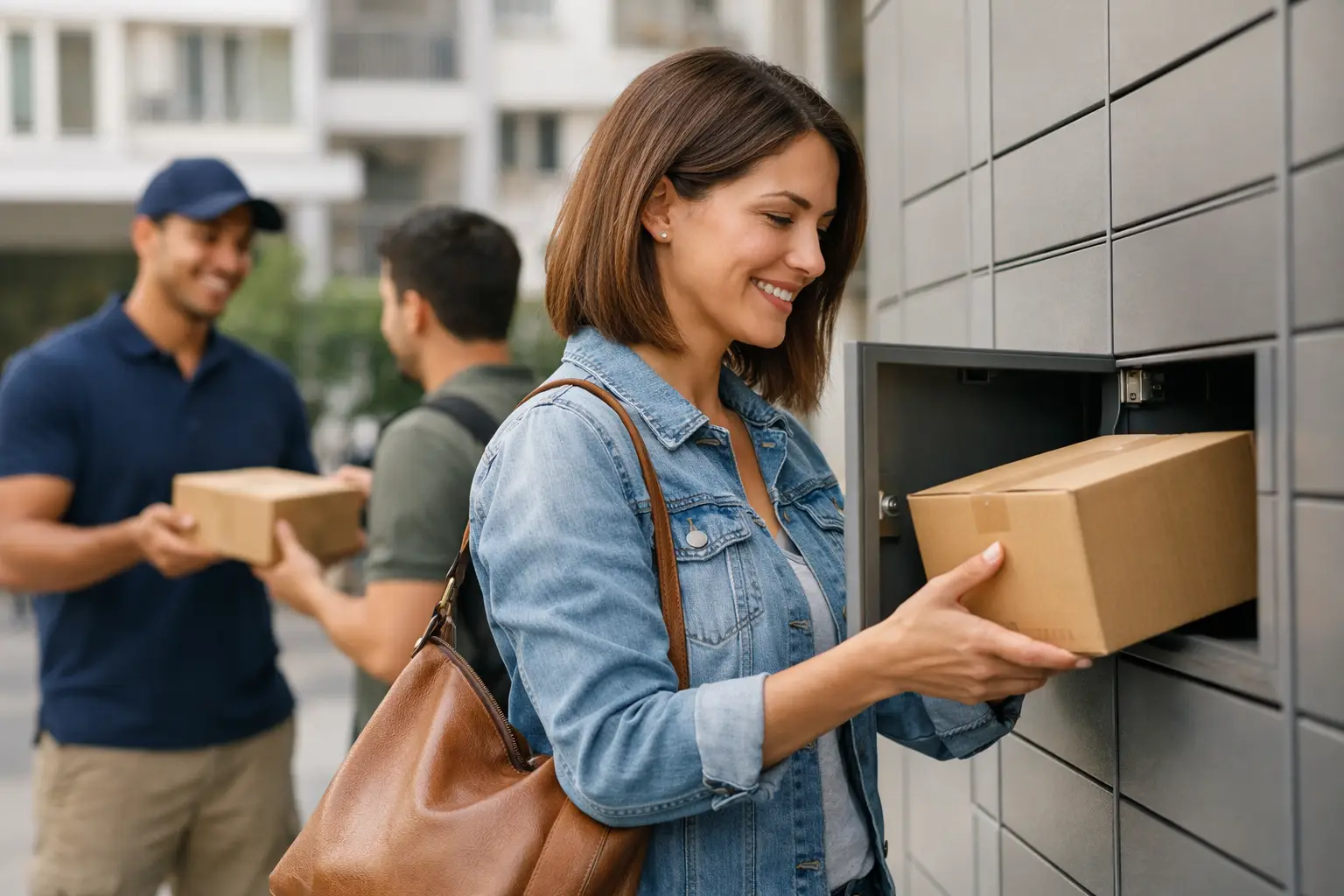
Courier collection points and parcel lockers suit expats who mainly receive online purchases and can collect them quickly. They are simple, often cheaper than repeat delivery attempts and useful if your area has poor door-to-door service.
The trade-off is that they are built around convenience, not continuity. Storage times can be short. Not every retailer or courier offers the same network. Official post, signed letters and sensitive documents may not fit this model at all. If you are away when the parcel arrives, the collection window may expire before you return.
For someone who travels often, this can turn one problem into another. You avoid missed doorstep delivery, but you still need to be in the right place at the right time.
Virtual mailbox and parcel reception services
For many expats, this is the most dependable answer to where can expats receive parcels. A professional mailbox and parcel reception service gives you a fixed address where post and deliveries can be accepted on your behalf, stored securely and managed even when you are abroad.
This matters because expat life often includes gaps – time between properties, seasonal moves, extended travel, unclear delivery instructions and periods when nobody can physically receive anything. A managed service removes those gaps. Instead of hoping a parcel arrives on the one day you are at home, you use an address set up to receive it properly.
A stronger service goes beyond simple acceptance. It may scan incoming post, notify you when something arrives, forward items to another address and keep parcels secure until you decide what to do next. That is especially useful for non-resident property owners, business users and anyone handling paperwork across more than one country.
If you need a stable address in Spain while spending part of the year elsewhere, a service like Letterbox.es can be practical because it combines parcel reception with digital post handling and business address support. That is a different level of control from asking a neighbour to keep an eye out.
When this option makes the most sense
A parcel reception service is usually the best fit if you are not permanently present, if your building is difficult for couriers to access, if you receive important documents, or if you need a more professional address for business operations. It is also a strong option if you are tired of tracking deliveries around your travel calendar.
There is a cost, of course, and for someone who receives one parcel every few months it may feel more than necessary. But for regular deliveries or high-value post, the gain in reliability often outweighs the subscription.
What expats should look for in a parcel reception option
Not all services solve the same problem. Before choosing where to receive parcels, look at the details that affect everyday use.
Security should come first. You want to know who signs for deliveries, where items are stored and how you are notified. A parcel left behind a desk is not the same as a parcel logged and held in a controlled system.
Address suitability matters too. Some services are ideal for personal deliveries but not for business registration or official correspondence. Others can support both. If you need a permanent postal presence, make sure the address can be used in the ways you expect.
Forwarding and scanning options are also worth checking. A simple receive-and-hold service is enough for some people. Others need post opened, scanned and sent digitally so they can act quickly from abroad. The more mobile you are, the more valuable remote access becomes.
Storage limits can make a big difference. Some providers are geared towards letters and small parcels only. Others can handle larger or more frequent deliveries. If you order equipment, household items or stock for a small business, capacity matters.
Finally, consider location. A parcel address only helps if it is in the place that fits your life or property. For someone connected to Gran Canaria, local handling is far more practical than routing everything through another region.
Common mistakes expats make with parcel delivery
One of the most common mistakes is using a temporary address for important deliveries. If you are in short-term accommodation, staying with friends or moving between properties, your parcel may arrive after you have already left. That is manageable for casual purchases, but risky for documents or expensive goods.
Another mistake is assuming all couriers can follow detailed delivery instructions. In reality, some drivers have limited time, language barriers, access issues or incomplete local address information. If your building is hard to find or requires a gate code, a professional receiving point can prevent repeat failures.
Expats also sometimes mix personal and business deliveries without thinking through the consequences. A home address may be acceptable for private parcels but less suitable if you want a consistent, professional base for company correspondence. Keeping both under one reliable system can save time and reduce confusion.
So, where can expats receive parcels most reliably?
If you are settled full time, have dependable access and someone is usually at home, your own address may be enough. If you only need occasional online shopping delivered and can collect it promptly, lockers and collection points may do the job.
But if you travel regularly, divide your time between countries, own property remotely, run a business or receive anything that cannot be missed, a dedicated mailbox and parcel reception service is often the safest option. It gives you a fixed point of contact when the rest of your arrangements are flexible.
That is really what most expats need – not just a place where parcels can arrive, but a system that keeps post secure, visible and manageable wherever they happen to be.
The simplest solution is usually the one that removes uncertainty. When your address works even when you are away, everyday admin becomes far easier to live with.