A missed bank letter, a signed delivery left in the wrong block, a tax notice arriving while you are out of the country – this is usually the moment people start asking how virtual mailbox works. The appeal is simple: you keep a real postal address, but you manage your post remotely. For seasonal residents, expats, remote workers and small businesses, that can remove a surprising amount of friction from everyday life.
A virtual mailbox is not a PO Box with a modern name. It is a service built around a real physical address where your post and parcels are received on your behalf, logged securely, and then handled according to your instructions. Depending on the provider and the plan, that might mean notification when something arrives, scanned copies of letters, forwarding to another address, safe parcel storage, or use of the address for business correspondence.
How virtual mailbox works step by step
The mechanics are straightforward, which is part of the value. You sign up for a plan, complete the required identity and authorisation checks, and receive a designated address to use for personal or business post, depending on the service. Once that address is active, letters and parcels begin arriving there instead of going to a home address, holiday property, or unattended office.
When post is delivered, the provider receives it at staffed premises. That matters more than many people realise. A staffed address reduces the risk of items being left in communal areas, misdelivered to neighbours, or returned because nobody was there to accept them. Each item is then recorded in the customer account or internal handling system.
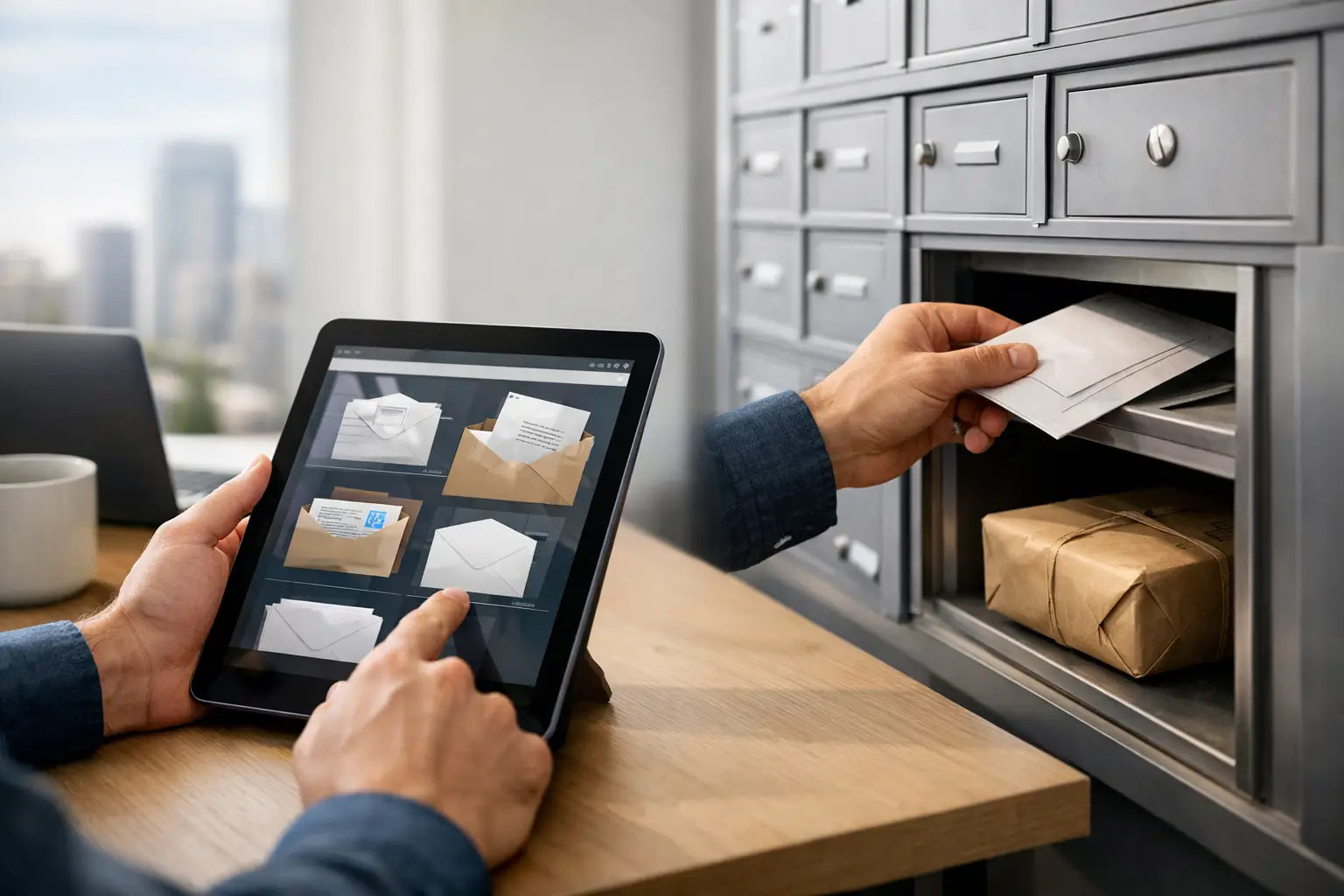
At that point, the next step depends on the service level you have chosen. Some customers only want receipt and storage until they can collect items in person. Others want envelopes opened and contents scanned so they can read important correspondence online within hours. Others still need regular forwarding to wherever they are currently staying, whether that is elsewhere in Spain or abroad.
The process sounds simple because it is. The real difference is that post stops depending on where you happen to be on any given week.
What happens when your post arrives
Most people want visibility first. A good service will notify you that an item has arrived and tell you what type of item it is, such as standard post, tracked delivery or parcel. That alone can solve a major problem for people who are frequently travelling or managing a property from another country.
If scanning is included, staff open the item, scan the contents, and upload the images to your secure account or send them through the agreed channel. This gives you quick access to time-sensitive documents such as utility letters, legal notices, insurer correspondence or supplier paperwork. For business users, it can also keep admin moving without waiting for international forwarding.
If you do not need the contents scanned, the item can remain in secure storage until collection or forwarding. Parcels usually follow a similar process, though storage limits, dimensions and handling fees can vary. That is one of the practical details worth checking before you choose a provider, especially if you expect frequent deliveries or larger items.
How virtual mailbox works for forwarding and storage
Forwarding is where the service becomes especially useful for mobile customers. Once an item is logged, you can usually request that it be sent on to a different address. That might be your home country, a temporary rental, another office, or a second residence. Instead of asking every sender to keep up with your location, you keep one stable address and move the post only when necessary.
Storage is the quieter part of the service, but often the one that saves the most stress. Important documents remain in a controlled location rather than piling up in a letterbox, being exposed in a reception area, or sitting uncollected for weeks. For parcels, secure storage also means less chance of missed deliveries and fewer awkward arrangements with neighbours, cleaners or building managers.
There is a trade-off here. If you need every physical document immediately, a forwarding-heavy setup may suit you better than scanning and storage. If you mainly need visibility and occasional forwarding, digital access can be faster and cheaper. The right balance depends on how often you travel, how much official post you receive, and whether original copies matter for your administration.
Personal use and business use are slightly different
For personal customers, the biggest benefit is continuity. If you are a non-resident property owner, an expat, or someone who spends part of the year in Gran Canaria and part elsewhere, a virtual mailbox gives you one reliable place for official correspondence. You are less dependent on seasonal occupancy, temporary rentals or communal post areas that do not always handle deliveries well.
For business users, the value goes beyond convenience. A stable mailing address helps present a more professional image and keeps correspondence separate from a home address. It can also support company administration, customer communications and supplier paperwork without the cost of permanent office premises. Some services add registered business address options and access to short-term office facilities, which is useful if you occasionally need a professional base on the ground.
This is where a provider with business support can make a difference. If the same service can receive post, manage parcels and support occasional office needs, administration becomes more consistent. For small businesses and remote operators, that consistency often matters more than having a full-time office they rarely use.
Security, privacy and control
The best virtual mailbox services are built around controlled handling. Your post is received by authorised staff, stored in secure premises and processed according to your instructions. That is safer than leaving important documents in an unattended box, especially in shared buildings or holiday developments.
Privacy also matters. A virtual mailbox gives you a degree of separation between your public correspondence address and your living arrangements. For businesses, that can look more professional. For individuals, it can simply feel more sensible.
Control is the final piece. Instead of reacting after post has been missed, you decide what happens next. Open and scan it. Hold it. Forward it. Keep the parcel until you arrive. That level of control is often what turns the service from a nice idea into a practical necessity.
What a virtual mailbox does not do
It is worth being clear about the limits. A virtual mailbox is not the same as full legal representation, and it does not automatically replace every requirement tied to tax residency, company registration or regulated activities. Some organisations accept a mailing address for correspondence but require another address type for legal or operational purposes.
It is also not identical across providers. Some only handle letters. Some accept parcels but with strict size limits. Some offer scanning, while others only forward unopened items. If you need business address use, parcel reception and occasional office access under one service, check that each element is actually included rather than assumed.
That is why practical questions matter more than flashy promises. Ask how items are logged, how fast scans are uploaded, how forwarding is charged, how long parcels can be stored, and what identification is required to activate the service.
Who benefits most from this setup
If you live abroad but still receive regular post in Spain, the case is obvious. If you split your time between countries, it is equally useful. The same applies to entrepreneurs who want a credible correspondence address without taking on office overheads, and to remote professionals who need to keep paperwork moving while they travel.
It can also help if your current building is the weak point. Many people do not have a problem with the sender or the postal system itself. The issue is the handover at the final stage – communal boxes, absent residents, deliveries during working hours or parcels left with whoever happens to be nearby. A virtual mailbox creates a controlled final destination.
For customers in places such as Gran Canaria, where mobility, seasonal living and non-resident ownership are common, that reliability can be worth far more than the monthly fee. Services like Letterbox.es are designed around exactly that kind of practical gap.
Choosing a virtual mailbox is really choosing a more dependable way to stay reachable. When your post has a fixed, secure address and you can manage it from wherever you are, everyday admin stops interrupting your plans.