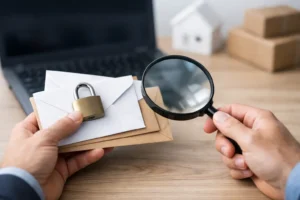
A missed utility bill, tax letter or signed-for delivery can become a costly problem when you are away from Gran Canaria, between homes or managing a business remotely. So, is mail forwarding secure? It can be, but the answer depends far less on forwarding itself than on who receives your post, how they verify instructions and the controls they use before anything leaves their premises.
For seasonal residents, non-resident property owners and remote businesses, a properly run virtual mailbox can be safer than leaving post in an unmonitored communal letterbox or asking a neighbour to handle confidential correspondence. The right service creates a clear chain of custody from receipt to scan, storage or dispatch. The wrong service may add another point at which sensitive information can be lost, delayed or mishandled.
Is mail forwarding secure with a virtual mailbox?
Mail forwarding is the process of receiving post at one address and sending it on to another address when you request it. With a virtual mailbox provider, the service may also include notifying you of arrivals, scanning envelopes or contents with your permission, securely storing items, and arranging forwarding when it suits you. For a step-by-step look at the service, see Spain mail forwarding service explained.
Security comes from the process around that service. A reliable provider should know whose post it is handling, record when it arrives, restrict access to authorised staff and follow confirmed delivery instructions. This matters whether the item is a bank letter, tenancy document, replacement card, contract or a parcel containing valuable equipment.
It is also worth separating privacy from convenience. Digital access to post is useful when you are abroad, but scanning creates a digital copy of a physical document. That copy needs the same care as your online banking or business records. Secure account access, limited staff permissions and sensible retention practices are therefore part of safe mail handling, not optional extras.
No forwarding arrangement can eliminate every risk. A courier can misroute a parcel; an address can be entered incorrectly; an official body may insist on sending an item directly to a particular address. What a professional service can do is reduce avoidable risk, make exceptions visible quickly and give you a dependable process for dealing with them.
Where mail forwarding risks usually arise
The most common weakness is not necessarily theft. It is poor administration. If a provider accepts vague instructions, cannot confirm where an item is stored, or relies on informal access to the premises, post can be delayed, sent to the wrong person or left exposed.
Identity fraud is another concern. Sensitive letters can contain names, account references, verification codes or documents that help someone impersonate you. That is why forwarding instructions should never be changed simply because an email appears to come from the account holder. A secure provider has a verification process for account changes and keeps a record of authorised contacts.
Parcels require their own controls. They may need a signature on arrival, a safe storage area and clear labelling to avoid mix-ups. Large, fragile or time-sensitive deliveries should not be treated as ordinary letters. Before using a service, establish whether it can receive your parcel type, how long it will store it and what happens if a courier attempts delivery outside normal reception hours.
There is a practical risk on the final leg, too. Forwarding post to a temporary holiday address, an unattended flat or a location with unreliable delivery does not make the item safer. In some cases, holding an item until you can receive it personally is the more secure choice.
What secure mail handling looks like
You do not need to be a security specialist to assess a provider. Ask direct questions about the journey your post takes from the door to your chosen destination. A credible answer should be specific, not a vague assurance that everything is handled carefully.
Look for these five essentials:
- Identity and authority checks: The provider should verify account holders and confirm who is allowed to view, collect or redirect post. Business accounts should have clearly named authorised users.
- Recorded receipt and storage: Incoming items should be logged, labelled and stored in a controlled area rather than placed in an open reception area or shared cupboard.
- Protected digital access: Your online account should use secure sign-in measures. You should also be able to see what has arrived without exposing the contents to anyone who is not authorised.
- Clear forwarding instructions: You should control the destination, delivery method and timing. Changes to these instructions should be confirmed through a secure process.
- Accountability when something changes: A provider should be able to explain what happened to an item, when it was received and what action was taken. This is particularly valuable for registered post and important business documents.
The best arrangements are simple from the customer’s point of view because the provider has done the detailed work behind the scenes. You receive a notification, choose whether to scan, store, collect or forward the item, and can make decisions without waiting weeks to return to the island.
Scanning post safely
Post scanning is often where customers have the most questions. The concern is reasonable: opening and digitising a letter involves personal information. Yet it can be a safer option than allowing urgent correspondence to sit unread for months, provided that you give clear consent and the provider uses disciplined handling procedures.
Envelope scans are useful when you only need to identify the sender and decide what to do next. Content scans are more appropriate for documents that need action, such as invoices, insurance correspondence or company paperwork. Consider using content scanning selectively rather than automatically for every item, especially if you receive highly sensitive financial or legal documents.
Once a document is available online, your own habits matter as well. Use a unique, strong password for the mailbox account, avoid accessing private documents on public Wi-Fi where possible, and remove downloaded files from shared devices. If you have a team, only give colleagues the access they genuinely need. Convenience should not mean every staff member can view directors’ post or customer documents.
Secure forwarding for businesses
For a company, post is not just correspondence. It can be evidence of a professional presence, a route for supplier documents and a source of time-sensitive legal or administrative notices. A business address service must therefore make a distinction between a presentable address and a functioning mail operation.
Make sure the service can identify post by company name as well as the account holder’s name. If several businesses share the address, ask how items are separated and whether authorised contacts can be managed by company. This prevents confusion when a director, accountant or operations colleague needs access, while keeping confidential items restricted.
Businesses should also set an internal rule for urgent post. Decide who receives notifications, who reviews scanned documents and who approves forwarding. A simple process can prevent a registered letter from sitting unnoticed because everyone assumed someone else was handling it.
For entrepreneurs who work across Spain, the UK, Portugal or Italy, a stable business address paired with controlled forwarding can offer more continuity than repeatedly changing correspondence details. It also avoids asking clients or authorities to send important post to a temporary accommodation address.
Questions to ask before choosing a provider
A trustworthy provider should welcome practical questions. Ask how identity is verified, where post and parcels are kept, who can access them, and how forwarding changes are approved. Ask whether registered items are logged separately and what notification you receive when an item needs a signature or prompt attention.
You should also understand the commercial details. Check storage periods, parcel size limits, forwarding costs, collection arrangements and whether certain items cannot be accepted. Transparency is a security feature in its own right: unclear terms often create rushed decisions when an important delivery arrives.
Location matters, too. A staffed, professional facility with established procedures is generally a better proposition than an informal address arrangement. Letterbox.es, for example, combines a dependable Gran Canaria address with mail receipt, scanning, parcel handling and forwarding choices, so customers can retain control even when they are not locally available.
Use forwarding as part of a sensible routine
Secure mail forwarding works best when it supports a wider routine. Keep your account details current, review notifications promptly and tell the provider when you expect a significant delivery. If you are travelling for an extended period, decide in advance which items should be scanned, held or sent to you.
The aim is not to make post complicated. It is to ensure that important correspondence has a known destination, a controlled handling process and an owner who can act on it. When those three things are in place, forwarding becomes a practical way to stay reachable without leaving your privacy or professional reputation to chance.