
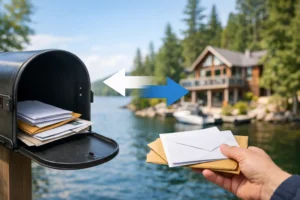
A second home should make life easier, not create a backlog of unanswered post, missed deliveries and awkward calls to neighbours. That is why a reliable mail service for second homes has become less of a nice extra and more of a practical necessity for owners who split their time between properties, live abroad for part of the year, or simply do not want important post sitting unattended.
For many owners, the problem starts small. A bank letter arrives while the property is empty. A parcel is left in a communal area. A renewal notice turns up days before a deadline, but nobody is there to open it. Over time, those small gaps become a real administrative risk. If your second home is in Spain while you are in the UK, or vice versa, staying on top of post can quickly become a job in itself.
Why a mail service for second homes matters
Most second-home owners are trying to solve the same issue – how to stay reachable without being physically present. Standard post still matters. Government letters, banking documents, insurance papers, community fee notices, legal correspondence and signed deliveries do not stop just because a property is used seasonally.
Relying on a friend, cleaner or keyholder can work for occasional help, but it is rarely a proper system. Post can be missed, delayed or handled inconsistently. That may be acceptable for leaflets or routine notices. It is far less acceptable for tax correspondence, residency paperwork or anything time-sensitive.
A dedicated service gives you continuity. Instead of wondering what has arrived and where it is, you have a fixed process for receiving, checking and managing incoming post. That peace of mind is often the real value.
What a good second-home post service should actually do
Not every service is built for the way second-home owners live. Some simply receive letters. Others provide a more useful setup that lets you stay in control from anywhere.
At minimum, a practical mail service for second homes should receive post securely and confirm when it has arrived. That sounds basic, but it removes one of the biggest uncertainties. From there, the service becomes much more useful if it can scan envelopes or contents, forward items on request, and hold parcels safely until you decide what to do next.
This is especially helpful if your second home is empty for weeks or months at a time. You do not need everything forwarded immediately. In fact, forwarding every single item can become expensive and unnecessary. Often, the better option is to view incoming post digitally, decide what matters, and only forward the pieces you actually need in original form.
Parcel handling matters too. Owners increasingly use second homes as delivery points for household items, maintenance supplies and personal purchases before a visit. If there is nobody on site to receive those parcels, deliveries can fail or go missing. A service that accepts and stores parcels closes that gap.
Digital control is the real advantage
The difference between a basic receiving address and a genuinely useful service is control. If you are travelling, living abroad or only visiting your property a few times a year, you need visibility more than anything else.
Digital scanning gives you that. You can see what has arrived without waiting for a bundle of redirected post to turn up days later. You can prioritise urgent items, file routine correspondence and act quickly when deadlines are involved. For non-resident owners, this can make administration far less stressful.
There is also a security benefit. Important post is not left in a communal letterbox, under a door or with a neighbour who may or may not remember to pass it on. It is received into a managed process. For official correspondence, that matters.
When forwarding helps and when it does not
Forwarding is useful, but only when used sensibly. Some owners assume the answer is to redirect everything from the second home to their main residence. That can work if your post volume is low and your location is stable. It becomes less practical if you travel frequently, live across borders, or receive parcels as well as letters.
There is also the issue of timing. Redirected post can take time, especially when it crosses countries. If you need quick visibility, scanning first and forwarding selectively is usually the better model.
Original documents still matter in some cases. Contracts, legal notices, signed paperwork and certain official letters may need to be held securely or sent on in hard copy. A good service should let you choose. Flexibility is important because not all post needs the same treatment.
Who benefits most from this kind of service
Second-home owners are not one single group. Some use their property for family holidays. Others are retirees splitting the year between countries. Some are landlords, and some run businesses while moving between locations. The common factor is that they cannot be at the property full-time, but their post still arrives as if they were.
Seasonal residents often benefit most because they tend to have bursts of activity around arrival and departure dates. There may be utility setup letters, maintenance invoices, community notices and personal deliveries all within a short period. Missing one item can create unnecessary friction.
Expats and non-residents also gain a lot from having a stable mailing address and a managed system behind it. If your paperwork spans two countries, reliable post handling is not just convenient. It can help you stay compliant and avoid delays.
Remote professionals and business owners are another strong fit. If you use a second home part of the year and still need a dependable address for correspondence or parcels, combining personal post handling with business support can simplify things. In that respect, providers such as Letterbox.es appeal because they bring together secure post receipt, scanning, forwarding and broader address services under one operational setup.
Choosing the right mail service for second homes
The right choice depends on how you use the property. If you only need cover for occasional letters, a simple receiving and notification service may be enough. If you spend long periods away, receive parcels, or manage official paperwork from abroad, you will need something more capable.
Look first at security and reliability. Where is the post received? How is it logged? Who has access to it? If scanning is included, how quickly is it done? Those questions matter more than flashy features.
Then consider flexibility. Can you request forwarding only when needed? Are parcels accepted as well as letters? Is there storage if you are away for several weeks? A service that works well for full-time residents may not suit second-home owners who need remote control rather than daily collection.
Price matters, of course, but so does the cost of getting it wrong. One missed legal notice or one lost registered item can easily outweigh a modest monthly fee. For most owners, the best-value service is the one that reduces risk and saves time, not simply the cheapest option on paper.
Common concerns owners have
Some people worry that using a managed address or virtual mailbox will be complicated. In practice, the better services are straightforward. Your post is received, you are notified, and you decide whether it should be scanned, stored or forwarded. The process should reduce administration, not add another layer of it.
Others wonder whether a service like this is only for business users. It is not. Personal post, official documents, property-related correspondence and online orders can all be handled through the same system, provided the service is set up for both letters and parcels.
There is also the question of trust. That is reasonable. If a provider is handling sensitive correspondence, professionalism matters. Clear processes, secure handling and transparent communication should be the standard, not the bonus.
A practical way to stay reachable
Owning a second home already involves enough moving parts. Post should not be one of the uncertain ones. A dependable service gives you a fixed address, secure receipt, remote visibility and a clear process for dealing with what arrives, whether you are five minutes away or in another country.
If you use your property seasonally, live between locations or simply want less dependency on neighbours and chance, a proper mail handling setup is one of the simplest ways to stay organised. The best option is not the one with the longest feature list. It is the one that makes your post manageable, secure and visible whenever you are away.