How to Receive Mail in Spain if You Don’t Live There
If you need to receive mail in Spain but do not live there permanently, there are several reliable solutions. Non‑residents, property owners, and digital nomads often use services such as virtual mailboxes, PO boxes, or mail forwarding providers. These services allow you to receive letters and parcels at a Spanish address and manage them remotely through scanning or international forwarding.
Why Receiving Mail in Spain Can Be Difficult for Non‑Residents
Many people who own property or spend part of the year in Spain still need to receive official letters, bank correspondence, and packages. However, traditional mail delivery requires a fixed address and someone available to collect deliveries.
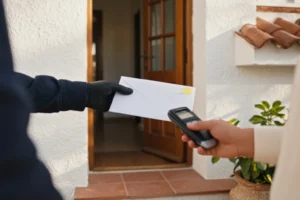
If your home in Spain is empty for long periods, letters can sit in a communal letterbox for weeks, and signed-for items can go back to the sender before anyone sees the notice. Our guide to registered letters in Spain when you are away explains how that works.
Common Situations Where This Is a Problem
Second‑home owners who only stay in Spain part of the year
Digital nomads who move between countries
Business owners managing a company remotely
Expats waiting for official documents
Ways to Receive Mail in Spain Without Living There
There are several options available depending on how often you receive post, what kind of letters you get, and how long you are away. As a non-resident, the main choices are a friend or family address, a Correos PO box, or a virtual mailbox with a street address. Each suits a different situation.
Use a Virtual Mailbox Service
A virtual mailbox provides a real Spanish address where your mail is received. The provider scans your letters or forwards parcels to your preferred location.
Best for: anyone away for months at a time, living abroad, or receiving official post and parcels. You can set it up online before you arrive. Letterbox.es has addresses in Gran Canaria, Cambrils and Barcelona; see our virtual mailbox plans, or compare virtual mailbox providers in Spain. If you run a company, a registered business address is a related option.
Use a PO Box
The Spanish postal service offers PO boxes (apartados de correos). According to Correos, you do not need to live in the town or be registered there to have one. However, you collect your post at the office during opening hours, and you get a box number rather than a street address, which is not always practical for non-residents.
Best for: people who are in the same town often enough to call in at the post office. Our PO box vs virtual mailbox guide covers costs and how to get one.
Use a Friend or Family Address
Some people ask friends or relatives to receive mail for them, although this can be unreliable for important documents. People travel, move or forget, and not everyone wants responsibility for someone else’s official letters.
Why Virtual Mailboxes Are the Most Flexible Solution
Receive mail from anywhere in the world
Mail scanning and digital access
Parcel receiving and forwarding
Secure handling of important letters
How to Choose by How Long You Are Away
A few weeks, within Spain: a trusted neighbour may be enough, or Correos’ Buzón de vacaciones, which holds your post, including arrival notices for registered items, for 1 to 14 weeks. The 2026 price is €15.33 for sign-up and the first week and €7.78 for each extra week on the mainland and Balearics (€13.56 and €6.88 in the Canary Islands), according to Correos’ 2026 tariffs. At the end, Correos delivers your post to your home or you collect it from the office.
Several months at a time: a virtual mailbox with scanning means you see letters as they arrive and can deal with anything urgent from wherever you are.
Living abroad, or not moved yet: a virtual mailbox with forwarding gives you a fixed Spanish address and a way to get originals sent to you when you need them.
Official Letters (Banks, Hacienda, DGT) to a Non-Resident
Banks, the Agencia Tributaria (Hacienda) and the DGT write to the address they hold for you, so keep it up to date and make sure someone will see what arrives. Registered letters need a signature: if nobody is in, Correos leaves an arrival notice (aviso de llegada) and the item waits at the post office for a limited time. Some public bodies also send notifications electronically, which you can check through the DEHú. Our guide to a postal address for non-residents in Spain covers which kind of address suits official post.
I need a mailing address in Spain but don’t live there yet. What are my options?
You can use a friend or family address, a Correos PO box, or a virtual mailbox. A virtual mailbox is the only one of the three you can set up online before you arrive that gives you a staffed street address. With a PO box you collect your post from the office, and a friend’s address depends on them being around.
Which address services give a non-resident a real address in Spain, not just a PO box?
Virtual mailbox and managed postal services give you a street address where staff receive your letters and parcels, then store, scan or forward them. Letterbox.es offers this in Gran Canaria, Cambrils and Barcelona; our comparison of virtual mailbox providers in Spain lists others.
Can someone receive my post for me in Spain?
Yes, a friend, neighbour or family member can collect ordinary post for you, and that works for short absences. Registered letters are harder, because they need a signature and must be collected within a set time. Read can someone receive my post for me? for what to arrange.
Is mail forwarding from Spain reliable?
Professional mail forwarding services receive your letters and packages at a fixed address and send them on to your chosen address, so you are not relying on an empty property. Our guide to how a Spain mail forwarding service works explains what to check.